Description
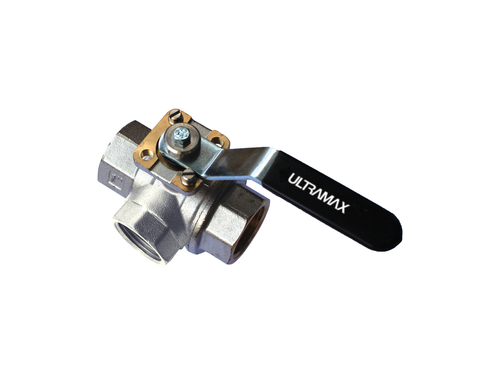
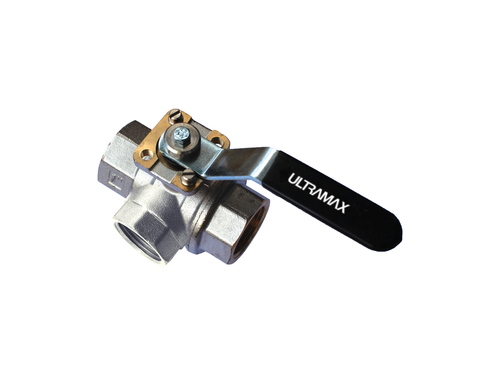
The 3-Way Brass Ball Valve (PN10) ISO 5211 Direct Mounting - L Port is a robust and versatile component designed for efficient flow control in various industrial applications. This valve primarily functions to isolate flow, regulate pressure, and control the direction of fluids within systems, making it ideal for use in manufacturing, mining, water treatment, compressed air systems, and process plants. Its durable brass construction ensures reliable operation and exceptional corrosion resistance, contributing to leak prevention and enhanced system safety. With a compact design and direct mounting capability, this valve promotes operational efficiency and longevity, making it a critical choice for engineers, maintenance teams, and procurement officers seeking dependable solutions for their industrial needs.
Features
- Constructed from high-quality brass for enhanced durability and corrosion resistance.
- Designed with a 3-way L port configuration for versatile flow control options.
- Features a PN10 pressure rating, suitable for a wide range of industrial applications.
- ISO 5211 direct mounting capability for easy actuator installation and maintenance.
- Compact dimensions: 2-inch size with a height of 103mm, length of 130mm, and width of 170mm.
- Precision-engineered ball design ensures minimal flow resistance and optimal performance.
- Robust sealing mechanism provides leak-free operation under various pressure conditions.
- Suitable for both on/off and throttling applications, enhancing operational flexibility.
Applications
- Used in fluid handling systems for efficient flow direction control in industrial processes.
- Ideal for compressed air applications, ensuring reliable operation in pneumatic systems.
- Facilitates water distribution in municipal and industrial water supply networks.
- Commonly employed in gas pipelines for safe and effective gas flow management.
- Utilised in steam systems to regulate steam flow and pressure in power generation.
- Essential for process control in manufacturing, allowing precise flow adjustments.
- Provides equipment isolation in maintenance operations, ensuring safety during repairs.
- Serves in HVAC systems for controlling heating and cooling fluid pathways.