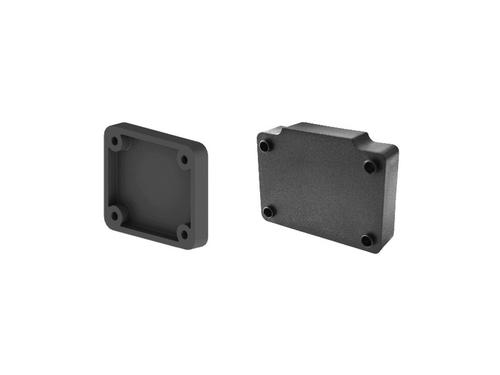
Description
Introducing our high-quality Spacer Blocks, designed for precision and versatility in various industrial applications. These Spacer Blocks, sized at 10, are engineered to provide reliable spacing and support in assembly processes, ensuring optimal alignment and stability. Constructed from durable materials, they offer excellent resistance to wear and tear, making them suitable for both indoor and outdoor use. Their robust design allows for easy integration into existing systems, while their lightweight nature facilitates effortless handling and installation. Ideal for use in machinery, construction, and manufacturing, these Spacer Blocks are essential for achieving accurate spacing and enhancing overall operational efficiency. With a focus on quality and performance, our Spacer Blocks are the perfect solution for your industrial needs, ensuring that your projects run smoothly and effectively.
Features
- Constructed from high-density polypropylene for enhanced durability and chemical resistance.
- Features a stainless or polymer split ring for secure and reliable connections.
- Equipped with EPDM or NBR sealing elements to ensure leak-proof performance.
- Available in both metric and imperial pipe size options for versatile applications.
- Comprehensive fitting range including couplers, elbows, tees, and reducers for diverse installation needs.
- UV-resistant body designed to withstand harsh environmental conditions.
- Suitable for both potable and non-potable water systems, ensuring broad usability.
- Reusable on most sizes, promoting cost-effectiveness and sustainability in installations.
Applications
- Ideal for rural water supply systems, ensuring reliable connections in remote areas.
- Used in irrigation laterals and submains to facilitate efficient water distribution.
- Essential for livestock water systems, providing durable and leak-proof fittings.
- Effective in mining dewatering applications, managing water flow in challenging environments.
- Facilitates plumbing transitions, allowing for seamless integration between different pipe materials.
- Perfect for pump and tank connections, ensuring secure and stable installations.
- Utilised in civil works repairs, offering robust solutions for infrastructure maintenance.
- Suitable for temporary pipeline installations, providing flexibility in dynamic project environments.