
Description
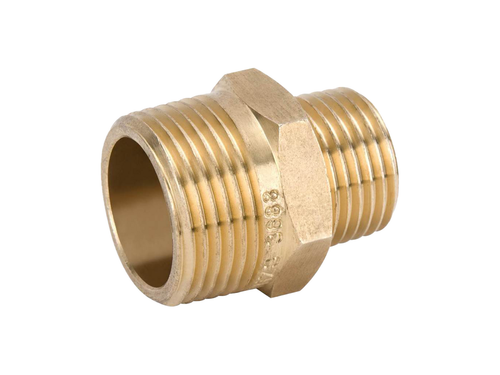
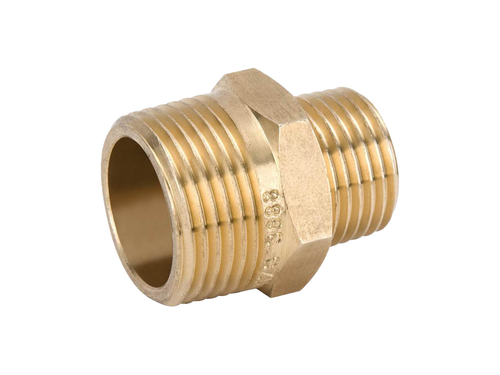
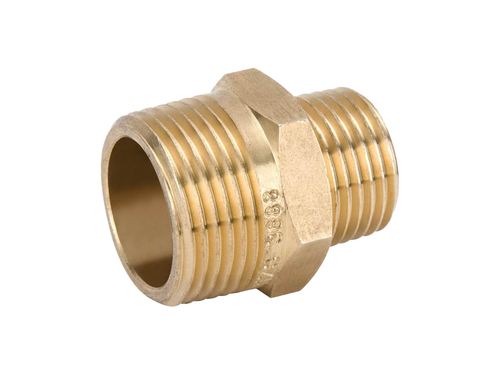
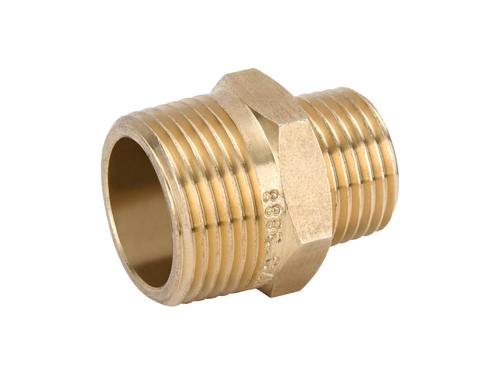
Brass reducing nipples are essential components in piping and tubing systems, designed to connect or adapt different pipe sizes while ensuring secure joints and maintaining flow continuity. These fittings play a critical role in various applications, including compressed air lines, water supply systems, gas distribution, hydraulic equipment, and industrial process piping. Their robust construction offers significant advantages such as strength, corrosion resistance, and reliable sealing, contributing to the safe operation of systems over extended periods. With a long service life, brass reducing nipples are a dependable choice for engineers, maintenance teams, and procurement officers seeking high-quality solutions for their industrial needs.
Features
- Constructed from high-quality brass for enhanced durability and longevity.
- Provides reliable connections, ensuring minimal risk of leaks in various applications.
- Features excellent sealing performance, maintaining integrity under varying conditions.
- Corrosion-resistant properties suitable for harsh industrial environments.
- Compatible with a wide range of piping systems for versatile installation options.
- Designed for easy installation, reducing downtime during maintenance or upgrades.
- Offers dependable operation, ensuring consistent performance in demanding settings.
- Resistant to wear and tear, ensuring long-term functionality and reliability.
Applications
- Used in compressed air systems to connect pipes of different diameters, ensuring efficient airflow and pressure management.
- Essential in water distribution networks for transitioning between varying pipe sizes, maintaining optimal flow rates.
- Utilised in gas supply lines to facilitate connections between different pipe sizes while ensuring leak-free operation.
- Commonly found in irrigation systems, allowing for the integration of various pipe sizes to optimise water delivery to crops.
- Integral to plumbing installations, providing reliable connections in residential and commercial applications.
- Applied in industrial process piping to adapt to changes in pipe diameter, ensuring seamless fluid transport.
- Utilised in heating systems to connect pipes of different sizes, enhancing thermal efficiency and system performance.
- Employed in hydraulic systems to manage fluid flow between components with varying pipe dimensions, ensuring system integrity.