Description
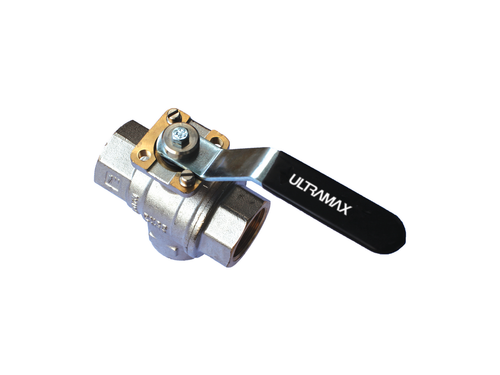
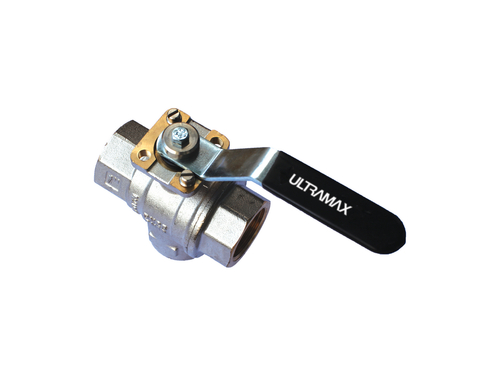
The 3-Way Brass Ball Valve (PN10) ISO 5211 Direct Mounting - T Port is a critical component in various industrial applications, designed to efficiently control the flow of fluids in multiple directions. This valve features a robust brass construction, ensuring durability and corrosion resistance, making it ideal for use in demanding environments such as manufacturing, mining, water treatment, and process plants. Its primary function includes isolating flow, regulating pressure, and directing fluid movement, which enhances system safety and operational efficiency. With reliable operation and effective leak prevention, this valve is essential for maintaining the integrity of compressed air systems and pipelines, providing engineers and maintenance teams with a dependable solution for their fluid control needs.
Features
- Constructed from high-quality brass for enhanced durability and corrosion resistance.
- Features a 3-way design with a T port configuration for versatile flow control.
- Direct mounting capability per ISO 5211 standards for easy actuator integration.
- Rated for PN10 pressure, ensuring reliable performance in various applications.
- Compact dimensions with a height of 66 mm, length of 100 mm, and width of 118 mm.
- Precision-engineered ball mechanism for smooth operation and minimal flow resistance.
- Suitable for a wide range of fluids, making it ideal for industrial applications.
- Easy maintenance with accessible components for quick servicing and repairs.
Applications
- Fluid handling in chemical processing plants for precise flow direction control.
- Compressed air systems in manufacturing facilities to manage air distribution effectively.
- Water distribution networks for efficient routing and isolation of water supply lines.
- Gas pipelines in energy sectors to ensure safe and reliable gas flow management.
- Steam systems in power generation to regulate steam flow and pressure in turbines.
- Process control applications in food and beverage industries for maintaining product quality.
- Equipment isolation in HVAC systems to facilitate maintenance without system shutdown.
- Hydraulic systems in construction machinery for controlling fluid movement and pressure.