Description
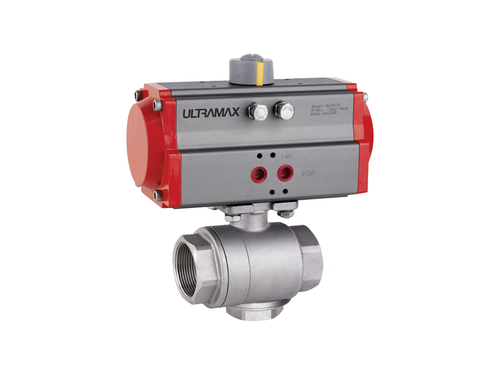
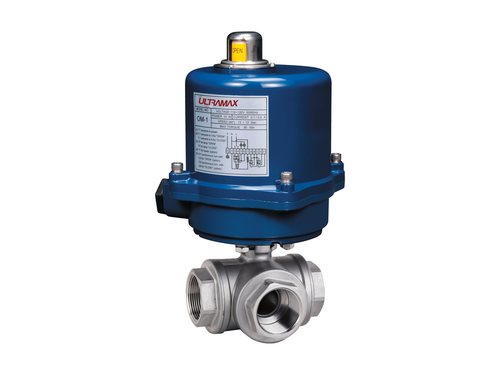
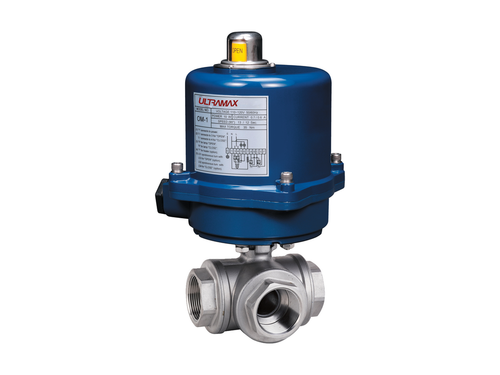
Our 3 Way Ball Valves with Spring Return feature a robust nickel-plated brass body, designed for reliable operation in demanding industrial environments. These valves are engineered to isolate flow, regulate pressure, and control the direction of media, making them essential components in various applications such as manufacturing, mining, water treatment, and compressed air systems. With a maximum working pressure of 16 barg and an orifice size of 1/2", they can handle media temperatures ranging from -20ºC to 140ºC. Their spring return mechanism ensures quick and safe operation, enhancing system safety and operational efficiency while preventing leaks. Ideal for process plants and pipelines, these valves offer durability and corrosion resistance, ensuring long-lasting performance in critical applications.
Features
- Constructed with a durable nickel-plated brass body for enhanced corrosion resistance.
- Features a 1/2" orifice, optimising flow control in various applications.
- Designed for a maximum working pressure of 16 barg, ensuring reliable performance under high pressure.
- Operates effectively within a media temperature range of -20ºC to 140ºC.
- Spring return mechanism provides quick and reliable valve closure for safety and efficiency.
- T-port configuration allows for versatile flow direction and mixing capabilities.
- Compact design facilitates easy installation in confined spaces.
- Suitable for a wide range of pneumatic applications, enhancing operational flexibility.
Applications
- Used in fluid handling systems for precise flow control in chemical processing applications.
- Ideal for compressed air systems, ensuring reliable operation in pneumatic machinery.
- Applied in water distribution networks to manage flow direction and isolation effectively.
- Utilised in gas pipelines for safe and efficient switching between gas sources.
- Employed in steam systems to regulate steam flow and pressure in industrial heating processes.
- Critical for process control in manufacturing environments, allowing for automated flow adjustments.
- Serves as equipment isolation valves in maintenance operations, ensuring safety during repairs.
- Implemented in HVAC systems for controlling air flow and temperature regulation in commercial buildings.