
Description
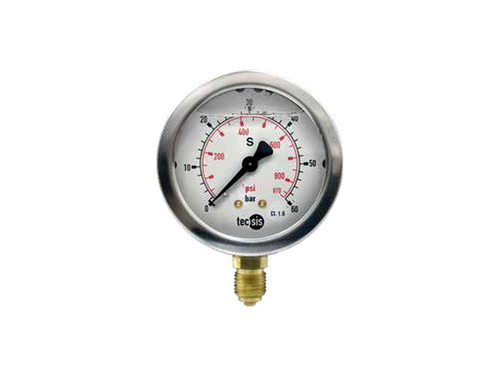
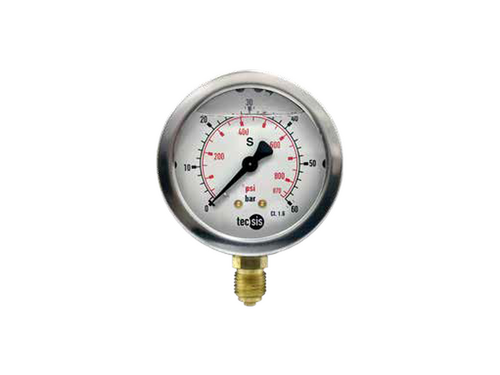
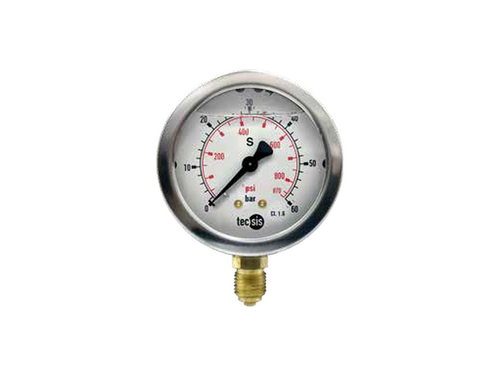
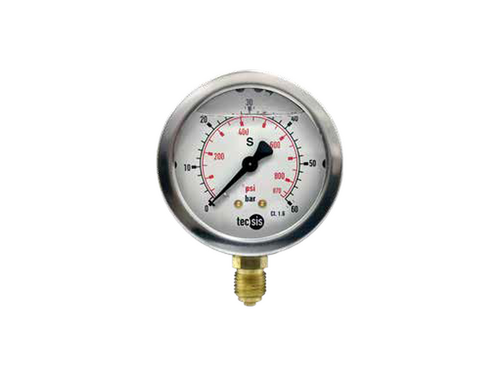
The 1/4" BSPP 63mm Bottom Entry Liquid Filled Pressure Gauge is designed for precise measurement of pressure in various industrial applications. With a pressure range of 0-250 bar (0-3600 psi), this gauge ensures accurate monitoring of system performance, making it ideal for use in manufacturing, mining, water treatment, and HVAC systems. The liquid-filled design enhances durability and reduces vibration, providing reliable performance even in challenging environments. Its bottom entry porting allows for easy installation in tight spaces, while the 63mm face size ensures clear visibility of readings. This pressure gauge not only aids in operational efficiency but also contributes to safety compliance and system protection, making it an essential tool for engineers, maintenance teams, and procurement officers.
Features
- High-precision sensing elements ensure accurate measurement and reliable performance.
- Clear, easy-to-read display enhances visibility in various lighting conditions.
- Robust construction provides exceptional durability for demanding industrial environments.
- IP-rated sealing protects against dust and moisture ingress, ensuring long-term reliability.
- Compatible with a wide range of fluids, making it versatile for different applications.
- Stable measurement performance reduces the need for frequent recalibration.
- Designed for easy installation and maintenance, minimising downtime.
- Built to withstand harsh conditions, ensuring consistent operation in challenging settings.
Applications
- Monitoring pressure levels in compressed air systems to ensure optimal performance and safety.
- Measuring liquid pressure in water distribution networks for effective flow management.
- Tracking gas pressure in pipelines to maintain system integrity and prevent leaks.
- Controlling steam pressure in industrial processes for efficient energy use and safety compliance.
- Utilising in process control systems to maintain precise operational parameters in manufacturing.
- Assessing hydraulic system pressure to ensure machinery operates within safe limits.
- Implementing in equipment monitoring systems to detect anomalies and prevent equipment failure.
- Employing in chemical processing to monitor and control fluid dynamics for consistent product quality.